Spring Flower Watercolor: A Practical Asset for Creative Projects
In the realm of digital design and print production, finding a balance between organic texture and vector flexibility is often a challenge. The Spring Flower Watercolor collection addresses this specific need by offering a hand-painted aesthetic that retains the precision required for modern workflows. This resource is not merely a decorative image; it is a functional asset designed to bridge the gap between traditional artistry and digital scalability. For professionals ranging from graphic designers to small business owners, the ability to incorporate genuine watercolor textures without sacrificing editability is a significant advantage.
The core value of this design lies in its dual-format delivery. While many digital assets are locked into raster formats like JPEG or PNG, which limit their utility upon resizing, this collection provides both high-resolution pixel data and editable vector files. This ensures that whether you are creating a large-scale banner or a detailed wedding invitation, the visual integrity remains intact. The inclusion of the .EPS format is particularly notable, as it allows creators to manipulate individual elements, adjust colors, and reconfigure layouts without degrading the quality of the original artwork.
Defining the Artistic Characteristics
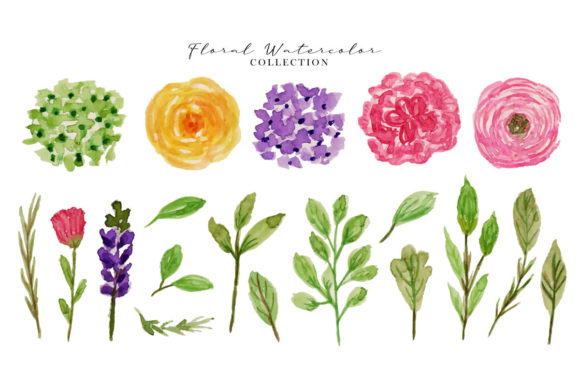
At its heart, the Spring Flower Watercolor captures the ephemeral nature of early blooms through a medium known for its unpredictability. The hand-painted origin introduces subtle variations in pigment density, edge softness, and color bleeding that are difficult to replicate with standard brushes or filters in software like Adobe Illustrator or Photoshop. These imperfections are not flaws; they are the defining features that give the design its authentic appeal.
When evaluating the visual output, one observes a palette typically associated with renewal and growth. Soft pastels, vibrant greens, and delicate pinks dominate the composition, making it ideal for themes centered on spring, weddings, and celebrations. However, the strength of the design extends beyond its seasonal relevance. Because the flowers are rendered in a watercolor style rather than a photorealistic one, they possess a level of abstraction that allows them to blend seamlessly with various typography styles and background patterns. This versatility prevents the design from feeling dated or overly literal.
The artistic intent appears to be rooted in providing a "ready-to-use" foundation. Instead of requiring a user to paint every petal individually, the artist has pre-composed complex floral arrangements. This saves considerable time while maintaining a high standard of aesthetic quality. For freelancers working under tight deadlines, this distinction between a raw asset and a finished illustration can be the difference between meeting a deadline and missing it.
Technical Specifications and Usability
From a technical standpoint, the specifications provided align well with professional standards. The deliverables include the illustration in .EPS format alongside a .JPG pixel version. The .JPG file is noted as being high resolution at 300dpi. This resolution is the industry standard for print media, ensuring that when the image is printed on cardstock, fabric, or marketing materials, the edges remain sharp and free from pixelation.
The .EPS format serves a different but equally critical function. As an Encapsulated PostScript file, it is a vector-based format that supports infinite scaling. This means that if a designer needs to expand a small flower motif to cover a full-page layout, the lines will remain crisp. Furthermore, the description emphasizes that the design is "full editable." In practical terms, this implies that the layers within the EPS file are likely grouped logically, allowing users to isolate specific flowers, change their hue to match a brand identity, or remove elements to create custom negative space. This level of control transforms the asset from a static image into a modular component of a larger design system.
Real-World Applications and Performance
The true test of any design asset is how it performs in diverse real-world scenarios. Based on the characteristics of the Spring Flower Watercolor, several primary use cases emerge where this resource excels.
- Wedding Invitations and Stationery: The romantic and soft aesthetic makes it a natural fit for nuptial announcements. The vector capability allows for precise sizing to fit various envelope dimensions and paper stocks, while the high-resolution raster version ensures perfect print quality.
- Fabric and Textile Design: The seamless nature of watercolor patterns often translates well to textile printing. Designers can use the editable vector files to create repeating patterns for clothing, scarves, or home decor items. The ability to adjust colors is crucial here, as manufacturers may require specific Pantone matches.
- Digital Marketing and Social Media: While the primary focus is often print, the 300dpi JPG is also suitable for high-quality web graphics. Bloggers and content creators can use these images as featured headers or background elements for newsletters, adding a touch of elegance that stock photography sometimes lacks.
- Product Packaging: Small business owners selling artisanal goods, such as soaps, candles, or gourmet foods, can leverage this design to create cohesive branding. The organic feel of the watercolor complements eco-friendly and handmade product positioning effectively.
In each of these applications, the consistency of the design is key. Unlike AI-generated imagery, which can sometimes produce inconsistent details across a series, a hand-painted set maintains a uniform style throughout. This consistency helps build a recognizable brand identity, which is vital for entrepreneurs looking to establish a long-term presence in their market.
Evaluating Limitations and Considerations
No asset is without its limitations, and understanding these is essential for informed decision-making. While the Spring Flower Watercolor offers significant flexibility, it requires a certain level of proficiency in vector editing software to fully utilize the .EPS benefits. Users who are unfamiliar with tools like Adobe Illustrator or Affinity Designer may find the vector layering challenging to navigate initially. They might prefer to stick to the .JPG version, which limits their ability to rearrange elements but simplifies the workflow.
Additionally, the "hand-painted" nature means that the exact shade of color in the digital file might vary slightly from the physical painting due to monitor calibration and printer profiles. While the 300dpi resolution mitigates pixelation issues, color management remains a variable that depends on the user's hardware and printing process. It is advisable for professionals to perform a proof print before mass-producing materials to ensure the digital representation matches the final output.
There is also the consideration of uniqueness. Since this is a commercial asset available for purchase or download, other designers may use the same base design. To avoid a generic look, users must invest time in customizing the arrangement, integrating unique typography, or combining the flowers with other distinct graphic elements. The design provides a strong starting point, but it does not guarantee a unique end result without further creative input.
Strategic Value for Creators and Businesses
For the target audience of professionals, educators, and hobbyists, the Spring Flower Watercolor represents a strategic investment in efficiency and quality. By outsourcing the initial artistic creation, creators can focus their energy on the broader aspects of their projects, such as copywriting, layout strategy, and client communication. This division of labor is a hallmark of effective project management.
The long-term value of owning editable vector files cannot be overstated. Digital trends shift rapidly, but a classic watercolor motif often possesses timeless appeal. Having a library of such assets allows businesses to adapt quickly to seasonal campaigns without commissioning new artwork every time. Whether it is a Mother's Day promotion, a summer sale, or a spring-themed educational worksheet, the availability of this design ensures that the visual content is always ready.
Furthermore, the clarity of the deliverables—specifying the formats and resolution upfront—demonstrates a level of professionalism that builds trust. In a market saturated with vague descriptions and low-quality previews, a clear specification of 300dpi resolution and editable .EPS files signals that the creator understands the practical needs of the buyer. This transparency reduces the risk of compatibility issues and ensures that the asset integrates smoothly into existing workflows.
Ultimately, the Spring Flower Watercolor is a robust tool for those who appreciate the beauty of traditional art but demand the functionality of digital media. It caters to the pragmatic needs of the modern creator who requires high-quality visuals that can be adapted, resized, and integrated into a wide array of projects. For anyone seeking to elevate their designs with an authentic, organic touch, this resource offers a compelling solution that balances artistic charm with technical reliability.