Happy Chuseok Vector Clip Art: A Practical Guide for Designers and Creators
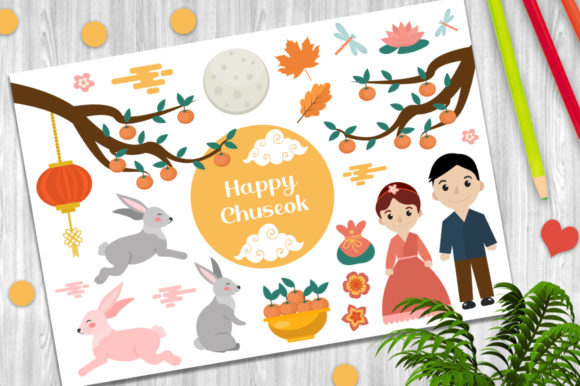
The Hanbok-clad rabbits, glowing full moons, and vibrant persimmons that define the Happy Chuseok Vector Clip Art collection are more than just decorative elements; they are essential assets for anyone looking to communicate cultural significance in a digital environment. For professionals ranging from marketing managers to freelance illustrators, these design elements represent a specific opportunity to engage audiences during one of Korea's most significant holidays. Unlike generic stock imagery, a dedicated set of objects featuring mid-autumn festival themes allows creators to maintain visual consistency while honoring the traditions of the Harvest Festival.
Understanding where this vector illustration clip art fits into your broader workflow is the first step toward effective implementation. Whether you are designing an email campaign for a global e-commerce platform or creating educational materials for a language course, the integration of these assets requires strategic planning. The process begins not with the software tool you open, but with the objective of your project. Are you aiming to increase engagement? Are you providing cultural context? Or are you simply updating seasonal branding? Answering these questions determines how you utilize the Happy Chuseok Vector Clip Art and ensures that the final output aligns with your goals.
Integrating Seasonal Assets into Business Workflows
In a professional setting, timing is everything. The Happy Chuseok set of objects is most valuable when integrated into the planning phase of a campaign rather than as an afterthought. Consider the lifecycle of a typical marketing project. During the initial strategy meeting, you might identify upcoming holidays as key touchpoints for customer interaction. At this stage, sourcing high-quality vector graphics becomes a priority. By acquiring a comprehensive collection that includes persimmons, rabbits, and moon motifs early on, you ensure that your creative team has the necessary resources to execute designs without delay.
This approach minimizes bottlenecks later in the production cycle. When the deadline approaches, designers can immediately access scalable vectors that fit perfectly into various layouts. Because these are vector files, they offer unparalleled flexibility. You can resize a single persimmon icon from a tiny social media avatar to a massive billboard banner without losing resolution. This scalability is crucial for maintaining brand consistency across different platforms, from mobile apps to print brochures. The ability to manipulate individual components—such as isolating a rabbit figure from the background moon—allows for dynamic composition that static images cannot provide.
Optimizing Creative Processes with Modular Design Elements
The Happy Chuseok Vector Clip Art collection functions best as a modular toolkit. Instead of treating each image as a standalone graphic, view them as building blocks for larger narratives. For educators and content creators, this modularity is particularly useful. Imagine developing a lesson plan about Korean culture. You might use the moon vector to illustrate the concept of unity, the persimmons to discuss agricultural history, and the rabbits to explain folklore. By having these elements in a vector format, you can easily recolor them to match your specific curriculum theme or combine them to create custom illustrations that tell a cohesive story.
For entrepreneurs and small business owners, this flexibility translates directly into cost efficiency. Rather than commissioning multiple custom illustrations for different product lines or promotional items, a single purchase of the Happy Chuseok set provides a versatile library. You can apply the same set of objects to packaging, website banners, and social media posts. This consistency strengthens brand recognition. When customers see the familiar moon and rabbit motifs across all their interactions with your brand, it creates a sense of reliability and attention to detail. The key is to establish a style guide that dictates how these elements should be used, ensuring they complement rather than overwhelm your core message.
Technical Considerations for Implementation
Successful implementation relies heavily on technical compatibility and file organization. Before diving into the design phase, it is essential to verify that the Happy Chuseok Vector Clip Art is compatible with your existing software ecosystem. Most professional workflows involve Adobe Illustrator, Affinity Designer, or similar vector-based tools. Ensure that the files are provided in standard formats like AI, EPS, or SVG. These formats allow for non-destructive editing, meaning you can adjust paths, colors, and shapes without degrading the image quality.
- Layer Management: Upon importing the clip art, organize your layers logically. Separate the moon, the rabbits, and the persimmons into distinct groups. This practice speeds up future edits and makes collaboration with other team members smoother.
- Color Palette Alignment: Check if the default colors of the vectors match your brand guidelines. If not, use global swatches to change colors efficiently. This ensures that any updates to your brand color scheme automatically reflect across all instances of the Happy Chuseok elements.
- Scalability Testing: Test the vectors at various sizes immediately. Verify that thin lines remain crisp and that details do not disappear when scaled down for mobile devices.
Furthermore, consider the accessibility implications of your design choices. While the Happy Chuseok set of objects is visually rich, it is important to ensure that the alt text and descriptions associated with these images accurately convey their meaning. For users relying on screen readers, describing a "persimmon" or a "rabbit" in the context of the Mid-Autumn Festival adds value and inclusivity to your content.
Workflow Examples Across Different Industries
To illustrate the practical application of these assets, let us look at how different professionals might integrate them into their daily routines. A marketer launching a holiday sale might use the vector clip art to create a series of countdown graphics. They could layer the moon behind text overlays and use the persimmons as bullet points for special offers. This creates a thematic connection that resonates with customers celebrating the harvest season.
Similarly, a blogger writing about travel or culture could embed these vectors into their articles to break up long blocks of text. The visual appeal of the Happy Chuseok collection draws the reader's eye and encourages them to spend more time on the page. In this scenario, the vectors act as anchors, guiding the reader through the narrative. The key is to use them purposefully, ensuring they enhance the content rather than distract from it.
Freelance illustrators and graphic designers often face tight deadlines. Having a pre-existing library of high-quality, culturally relevant assets like the Mid-Autumn Festival collection can significantly reduce turnaround times. Instead of spending hours sketching a traditional scene from scratch, a designer can assemble a custom composition using the provided elements. This allows them to focus on the creative direction and client communication, leaving the heavy lifting of asset creation to the efficient use of vector tools.
Maintaining Quality and Long-Term Value
Once the Happy Chuseok Vector Clip Art is integrated into your projects, the work does not end there. Effective asset management involves maintaining a clean and organized repository for future use. As seasons pass, you may find yourself needing to update old designs or repurpose elements for new campaigns. A well-organized folder structure with clear naming conventions will save you countless hours of searching. Tagging your vectors with keywords like "harvest," "moon," "Korean Thanksgiving," and "festival" ensures they are easily retrievable via search functions within your design software.
Quality control is another critical factor. Regularly review your usage of these assets to ensure they remain relevant and accurate. Cultural sensitivity is paramount when dealing with symbols like the Mid-Autumn Festival. Ensure that the depictions of rabbits, moons, and persimmons are respectful and aligned with the traditions they represent. Avoid altering the fundamental nature of the symbols in ways that might be misinterpreted. The goal is to celebrate the occasion authentically while achieving your design objectives.
Finally, consider the longevity of your investment. Vector files are durable assets that can be reused indefinitely. Unlike raster images that lose quality over time or become obsolete, vectors adapt to new trends and technologies. By incorporating the Happy Chuseok Vector Clip Art into your workflow now, you are building a foundation for future projects. Whether you are planning a campaign for next year's festival or creating evergreen educational content, these elements provide a reliable and visually appealing resource that stands the test of time.
In conclusion, the Happy Chuseok Vector Clip Art and the accompanying set of objects offer a powerful way to bridge the gap between cultural celebration and professional design. By approaching these assets with a strategic mindset, focusing on integration, technical compatibility, and ethical usage, creators can produce work that is both beautiful and functional. The process of planning, executing, and refining the use of these design elements transforms a simple holiday greeting into a meaningful part of your broader creative workflow.